Grading is the foundation every other trade builds on — literally. Before a slab is poured, a road is paved, or a utility line goes in the ground, the site has to be cut, filled, and compacted to the exact elevations on the civil plan. Get it wrong and water pools where it shouldn’t, floors aren’t level, and drainage never works the way it was designed. We use GPS and laser grade control to hit every elevation on the plan the first time, so pads are build-ready, yards drain away from structures instead of toward them, and every trade that follows us isn’t fighting the ground to do their job.
Rough Grading
Cutting and filling the site down to sub-grade, ready for foundations, utilities, and paving.
Finish Grading
The final grade pass that sets the exact elevations a structure or slab will sit on.
Yard & Slope Grading
Shaping the ground around a finished structure so it drains correctly and holds up over time.
Drainage Grading
Building the slopes and swales that move water where the civil plan intends — away from foundations.
SERVICE
UNDERGROUND UTILITIES.
Underground infrastructure installed to spec and tied in correctly the first time — from the sanitary sewer main to the last yard drain. Eight lines of work, each run start to finish by our own crews.
01
Sanitary Sewer Line Installation
Every fixture that drains in a building — sinks, toilets, floor drains — ties into the sanitary sewer system before it ever reaches the municipal main. We install gravity sanitary sewer lines at the exact slope required to keep waste moving without lift assistance, bed and backfill them to spec, and test every joint before the trench closes. Get the slope wrong and a line backs up for the life of the building; we don’t guess on grade.
HOW IT WORKS:
Pipe is set at a calculated fall so wastewater moves by gravity alone, then ties into the municipal main or a lift station.
02
Force Main
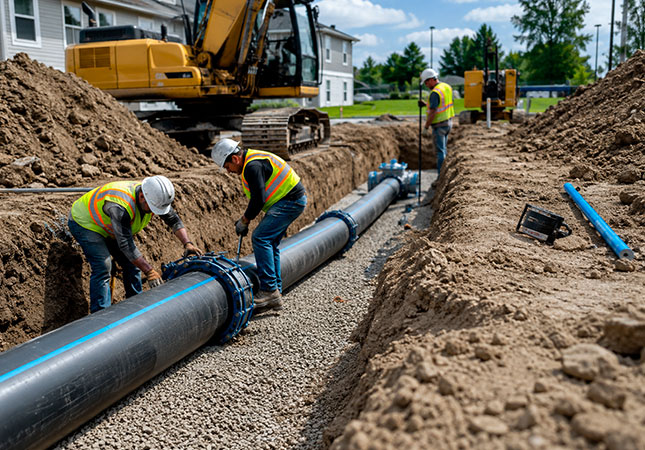
When gravity alone can’t get wastewater from a low point to the sewer system, a force main takes over — a pressurized line, fed by a pump or lift station, that pushes wastewater to where gravity can take over again. We install force main to the pressure rating and material spec the project calls for, tied in and tested before it goes into service.
HOW IT WORKS:
A pump or lift station pressurizes the line, pushing wastewater through pipe until gravity can take over again downstream.
03
Water Line
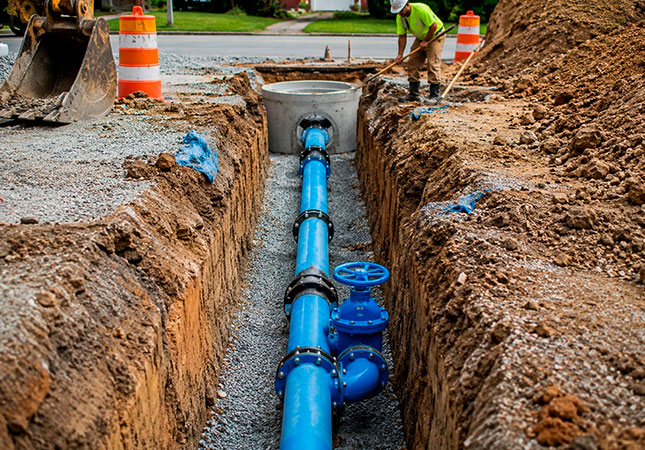
The potable water line is what turns a lot into a buildable site — the connection between the municipal water main and every fixture, hydrant, and tap on the property. We install water lines from the main to the meter, pressure-test every run before backfill, and hold depth and bedding to code, so there are no thawing, settling, or pressure-loss surprises after the site is built out.
HOW IT WORKS:
Pipe runs from the municipal main to the meter set, pressure-tested before it’s put into service.
04
Storm Drain
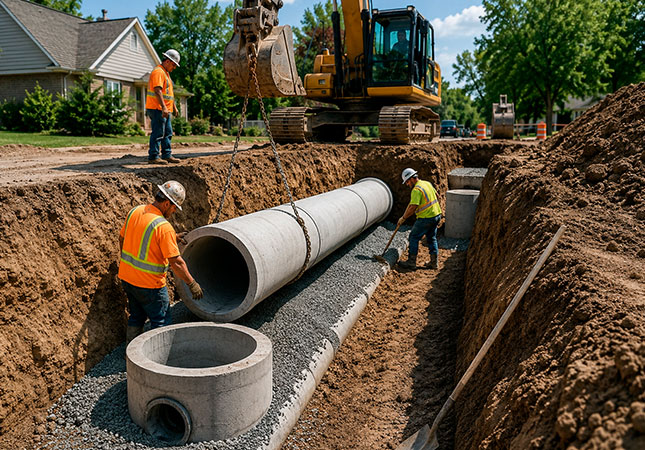
Storm drain systems exist for one reason: keep water from ending up somewhere it can do damage. We install the pipe, inlets, and structures that collect surface runoff — from parking lots and rooftops — and move it to the approved outfall or retention system, sized and sloped to handle the design storm the civil engineer planned for, not just a light rain.
HOW IT WORKS:
Inlets and pipe collect runoff and carry it by gravity to an approved outfall, pond, or detention system.
05
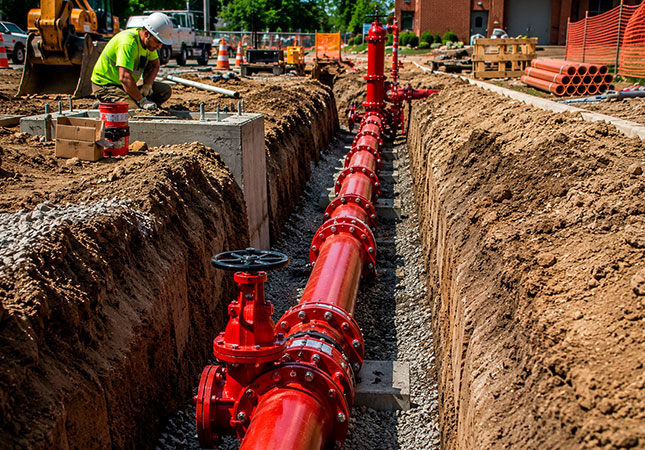
Fire Line
A fire line is a dedicated water supply built for one purpose: getting enough water, at enough pressure, to a hydrant or sprinkler system in an emergency. It’s installed and tested separately from the domestic water line, to the flow and pressure requirements the fire code demands — because on this one, close enough isn’t a passing test.
HOW IT WORKS:
A separate tap and line deliver high-volume, high-pressure water straight to hydrants or a sprinkler system, tested independently of domestic water.
06
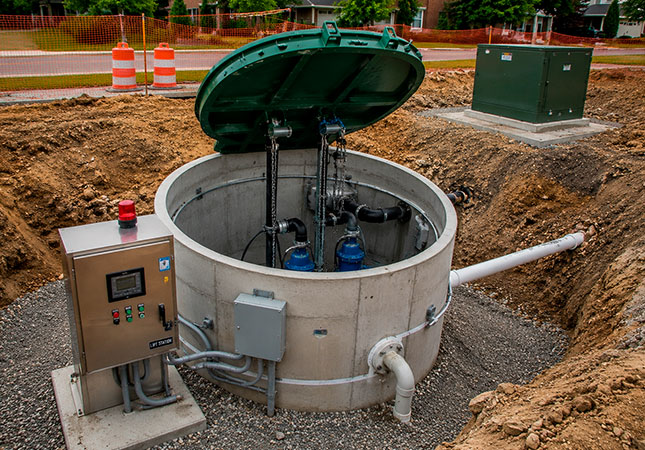
Lift Stations
On sites where the sewer main sits higher than the building, or the site is too flat for gravity flow, a lift station is what makes the sewer system work at all — pumping wastewater up and over so it can continue on to the main by gravity again. We install the wet well, pumps, and controls to the engineer’s spec and commission the station before it’s handed over.
HOW IT WORKS:
Wastewater collects in a wet well, and pumps trigger on a float switch to push it up and over to where gravity flow resumes.
07
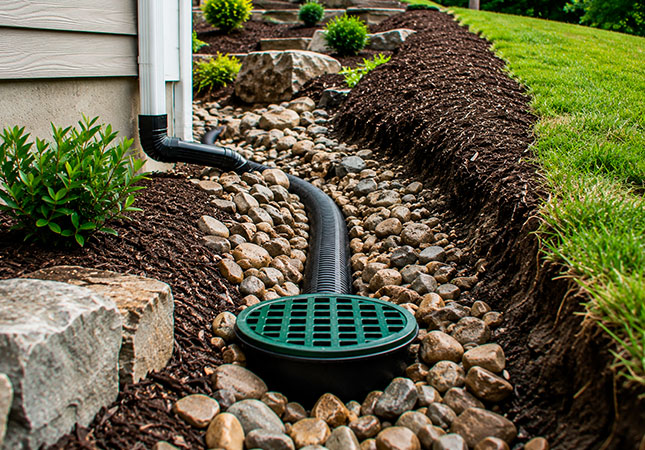
Secondary Yard Drain
Not all water on a site is supposed to go straight to the storm system — secondary yard drains handle the smaller, localized wet spots: low corners of a yard, areas behind retaining walls, spots where finish grade alone won’t move water fast enough. We tie these secondary systems into the main storm network, so nuisance water doesn’t sit around waiting for the main system to catch up.
HOW IT WORKS:
A smaller inlet and pipe network collects local low-point water and ties it into the main storm system.
08
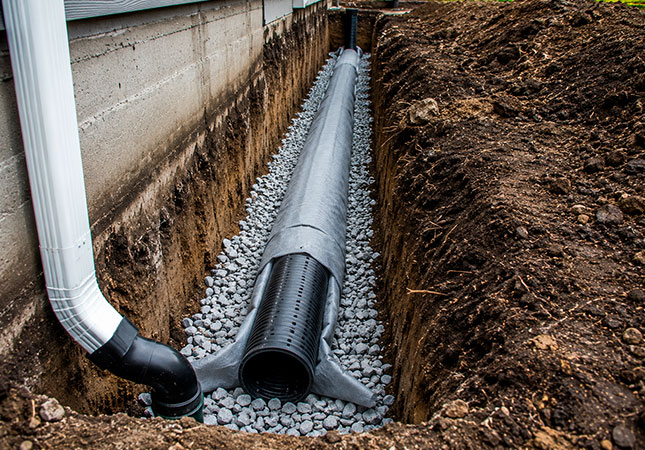
Under Drain
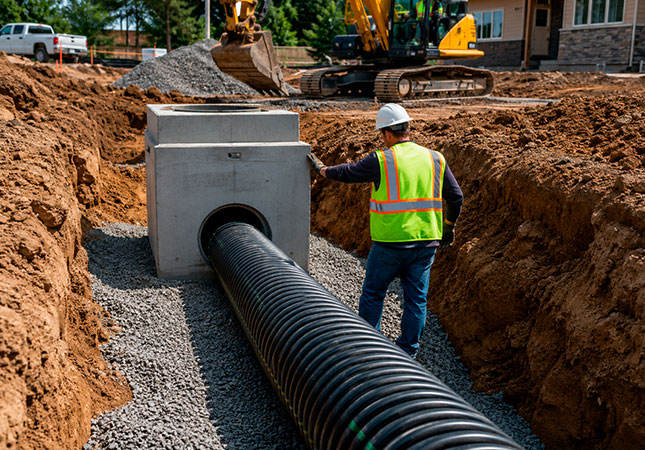
Under-drain systems work below the surface, where you can’t see a problem until it’s already causing one — relieving groundwater and hydrostatic pressure that would otherwise saturate a subgrade, undermine a pavement section, or push water into a foundation. We install perforated under-drain wrapped in the right filter fabric and gravel envelope, tied into an outlet that actually drains, so the water table stays below where it can do damage.
HOW IT WORKS:
A perforated pipe wrapped in gravel and filter fabric collects groundwater along its length and carries it to a safe outlet.
ON EVERY PROJECT
WHAT'S INCLUDED, NO EXCEPTIONS.
Written scope & line-item pricing before mobilization
Utility locates & call-before-you-dig on every project
Daily progress logs & point of contact on site
Compaction & density testing at each lift
Erosion control maintained through final inspection